
Linkt - Transurban
The Linkt website, used by Australian road users across Victoria, New South Wales and Queensland to manage toll payments, faced issues ever increasing with customer frustration and confusion. Many users struggled to find information, understand products, or complete simple tasks online, often turning to the call centre for help.
The Future Web Project was launched to fix this by studying how people complete their tasks and identifying what wasn’t working and why to help set up the digital teams to fix the most pressing issues swiftly.
This case study examines the Future Web project, a user experience research initiative focused on improving the Linkt website. Linkt, part of Transurban, is an Australian tolling company that provides services for paying for travel on toll roads across Victoria, New South Wales, and Queensland. The project aimed to address customer frustrations and pain points encountered while navigating the website and interacting with Linkt's digital assets.
Problem Statement
The Future Web project was initiated in response to poor customer satisfaction scores, large traffic to their call centre and feedback indicating significant usability issues with the Linkt website. Customers reported struggling to find information, failing to understand product offerings. Many struggled to complete essential tasks online, often resorting to calling Linkt’s call center for support.
The project's primary goal was to investigate the root causes of these issues and identify opportunities to improve the self-serve experience on Linkt's digital platforms. This involved understanding customer needs and behaviours, evaluating existing content and information architecture, and developing recommendations for enhancements and new features. The ultimate aim was to reduce customer frustration, decrease reliance on the call centre, and improve overall satisfaction with Linkt's digital services.
Users and Audience
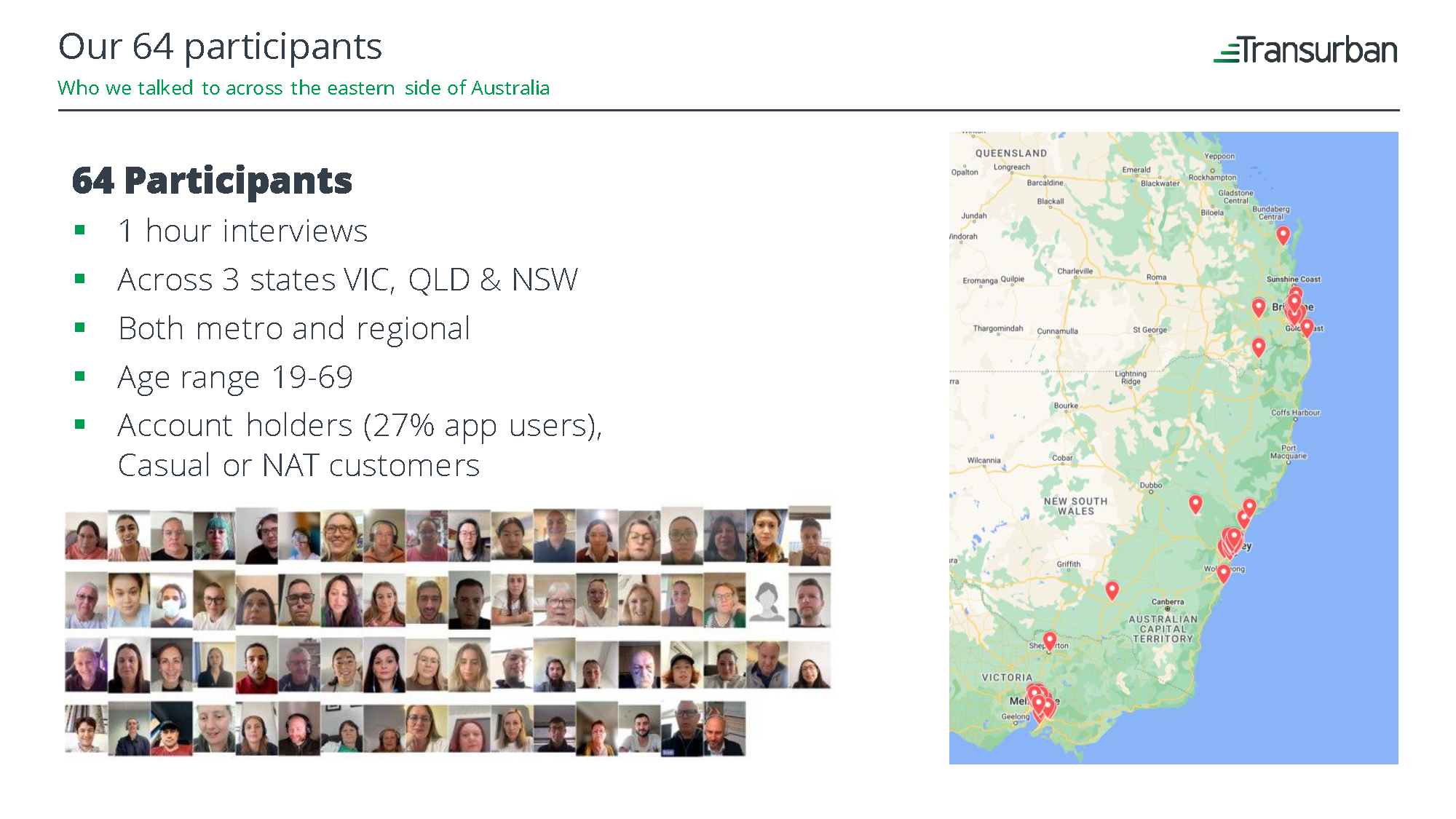
The target audience for the Future Web project encompassed all road users traveling on tollways in Melbourne, Sydney, and Brisbane. Recognising the unique characteristics and toll products associated with each city, the project considered location-based differences in user needs and behaviours. Additionally, the research acknowledged three distinct customer cohorts:
Urban Commuters: Individuals who frequently use toll roads for daily commutes within a metropolitan area.
Rural Road Users: People who travel on toll roads less frequently, often for work or personal trips outside major urban centres.
Holiday Travellers: Individuals who use toll roads while traveling for leisure or visiting unfamiliar areas.
While each cohort presented unique needs, the project sought to identify common pain points and develop solutions that addressed the overarching usability challenges faced by all users of Linkt's website and digital assets.
Roles and Responsibilities
The Future Web project was undertaken by a small team with a diverse range of expertise. The team consisted of:
Lead Designer/Researcher: Myself, responsible for overall project planning, sprint planning, task delegation, facilitation of ceremonies, and primary research activities.
Product Designers: Two designers, one full-time and one part-time, contributed to the design and research efforts.
Content Team Representative: Provided expertise and insights related to content strategy and optimisation.
Stakeholders: Representatives from various departments within the broader organisation, including the web delivery teams, the digital and experience leadership, Tolling support and Operations, Marketing and Training teams provided guidance and feedback.
This collaborative team structure ensured a comprehensive approach to understanding and addressing user needs, incorporating perspectives from design, research, content, and business stakeholders.
Scope and Constraints
The Future Web project operated within specific limitations that influenced the research process and recommendations. These constraints included:
Evidentiary Requirements: The project needed to demonstrate clear evidence of identified problems and present initial solutions or experiments to address them.
Time and Resource Constraints: The web team faced a backlog of projects and limited resources, necessitating keen prioritisation of the most impactful changes.
Fixed Budget and Timeframe: The project had a budget and timeframe of around 6 months with two dedicated team members.
These constraints emphasised the need for efficient research methods, focused recommendations, and prioritisation of high-value opportunities to maximise impact.
The Working Process and Actions Taken
The Future Web project followed a structured process to understand customer needs, identify pain points, and develop actionable recommendations. The process involved the following key steps:
1. Understanding the Business Context
Mapping out the entry and exit behaviour of customers on the Linkt website.
The team began by gathering information about existing Linkt products, services, and existing digital experiences and tools.
We reviewed available data sources, including website analytics, NPS scores, survey feedback, call centre transcripts, and previous research insights.
This initial phase aimed to establish a shared understanding of the business landscape and formulate hypotheses about customer needs and potential areas for improvement.
2. Understanding the Customers and their Jobs to Be Done
The team employed the Jobs to Be Done (JTBD) framework to understand and help articulate the fundamental tasks customers sought to accomplish when interacting with Linkt's digital assets. These helped to frame what customers were actually seeking to accomplish and helped to articulate these needs to the broader stakeholder group.
This required some education both within the digital team and senior leadership to understand the benefit and relevance of this approach.
We identified a comprehensive set of JTBD statements representing the overarching goals customers aimed to achieve on the website.
This step provided a customer-centric lens for evaluating website usability and identifying areas where the site failed to meet user needs.
3. Understanding the Current Products and State of Content
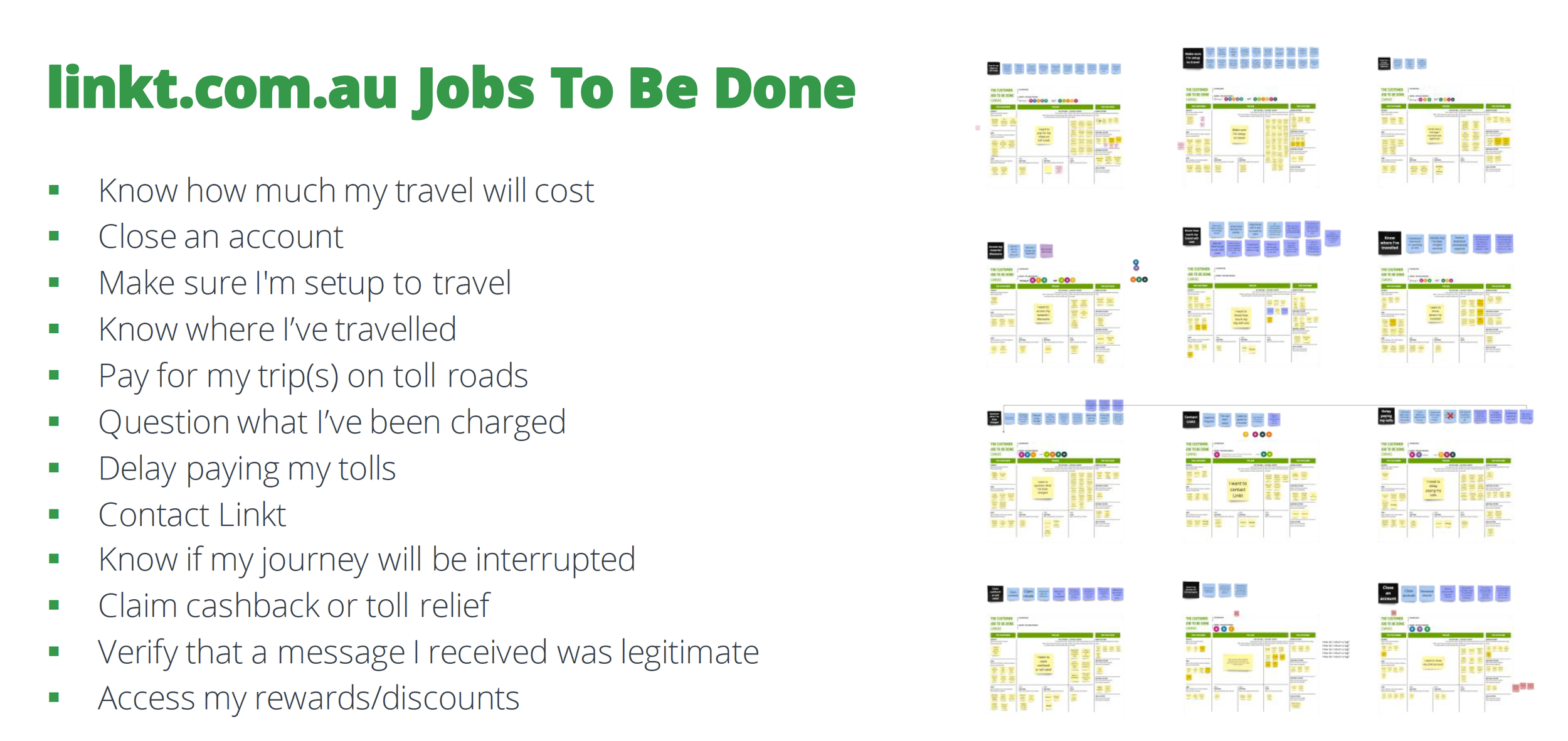
Hypothesised Jobs To Be Done and JTBD workshop (right hand side).
The team conducted a thorough audit of existing website content, evaluating its relevance, accuracy, organisation, and findability.
We analysed page structure, language, visual hierarchy, and adherence to content best practices.
This content analysis revealed many areas where content was outdated, duplicated, poorly organised, or difficult to understand. There were many places where content was overly verbose and the key information was buried within.
4. Identify the Gaps, Changes, or Challenges to Better Meet Customer JTBD
Raw interview notes
Theming / Affinity mapping
Gathering insights
Opportunities for squads