
Linkt - Transurban
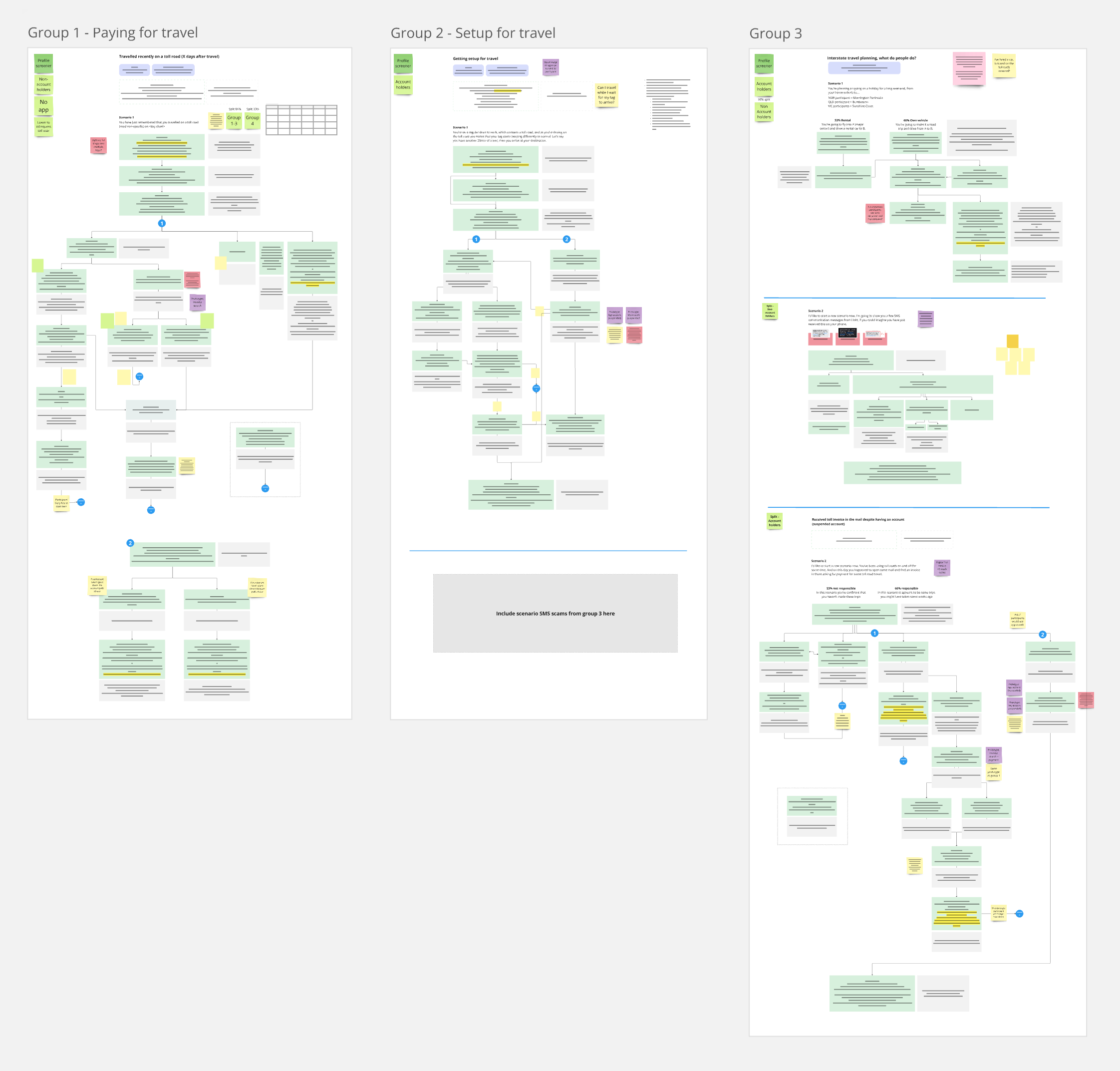
Tree based moderation guides for Task Analysis
The Linkt website, used by Australian road users across Victoria, New South Wales and Queensland to manage toll payments, faced issues ever increasing with customer frustration and confusion. Many users struggled to find information, understand products, or complete simple tasks online, often turning to the call centre for help.
The Future Web Project was launched to fix this by studying how people complete their tasks and identifying what wasn’t working and why to help set up the digital teams to fix the most pressing issues swiftly.
This case study examines the Future Web project, a user experience research initiative focused on improving the Linkt website. Linkt, part of Transurban, is an Australian tolling company that provides services for paying for travel on toll roads across Victoria, New South Wales, and Queensland. The project aimed to address customer frustrations and pain points encountered while navigating the website and interacting with Linkt's digital assets.
Problem Statement
The Future Web project was initiated in response to poor customer satisfaction scores, large traffic to their call centre and feedback indicating significant usability issues with the Linkt website. Customers reported struggling to find information, failing to understand product offerings. Many struggled to complete essential tasks online, often resorting to calling Linkt’s call center for support.
The project's primary goal was to investigate the root causes of these issues and identify opportunities to improve the self-serve experience on Linkt's digital platforms. This involved understanding customer needs and behaviours, evaluating existing content and information architecture, and developing recommendations for enhancements and new features. The ultimate aim was to reduce customer frustration, decrease reliance on the call centre, and improve overall satisfaction with Linkt's digital services.
Users and Audience
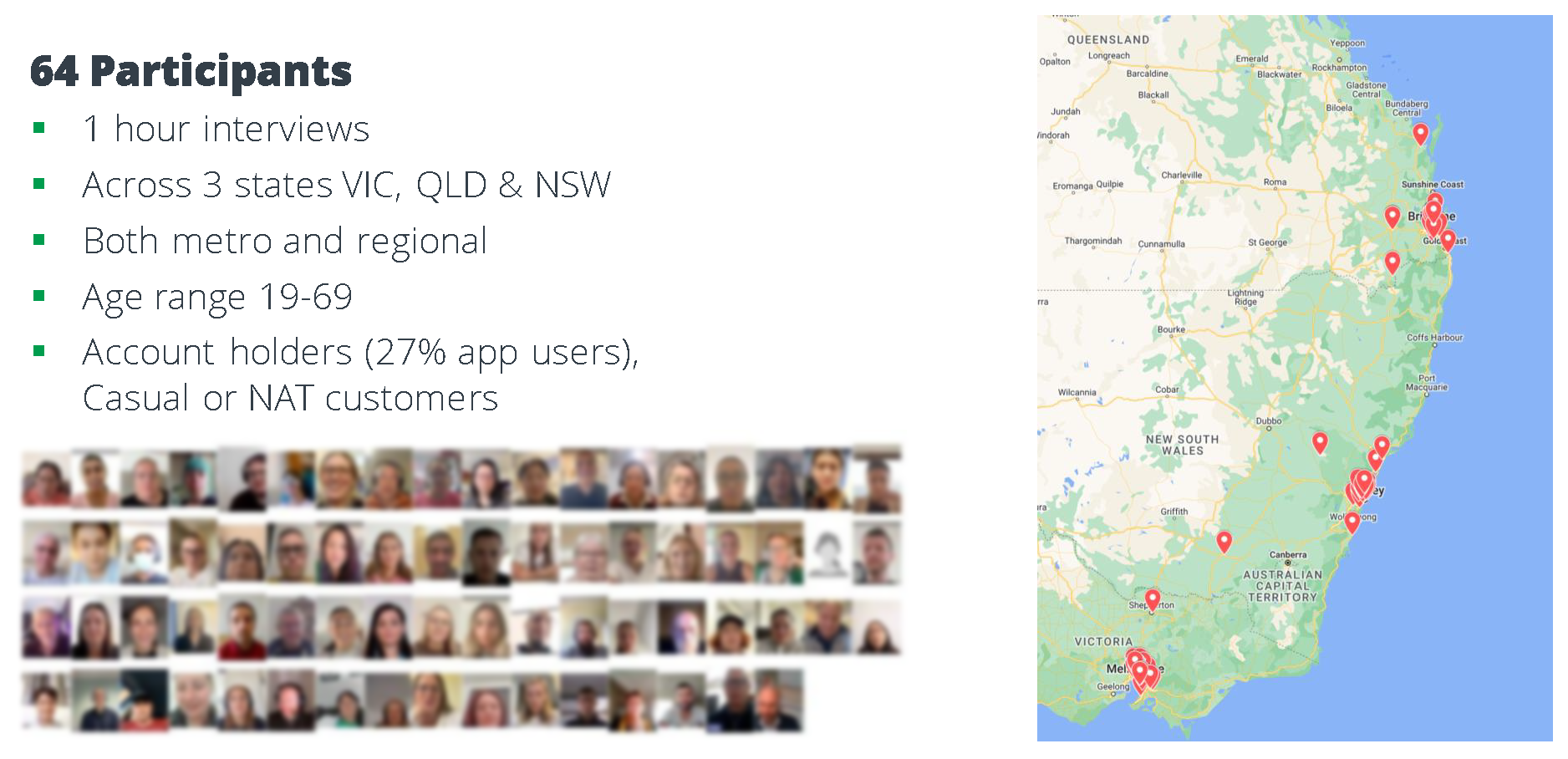
The target audience for the Future Web project encompassed all road users traveling on tollways in Melbourne, Sydney, and Brisbane. Recognising the unique characteristics and toll products associated with each city, the project considered location-based differences in user needs and behaviours. Additionally, the research acknowledged three distinct customer cohorts:
Urban Commuters: Individuals who frequently use toll roads for daily commutes within a metropolitan area.
Rural Road Users: People who travel on toll roads less frequently, often for work or personal trips outside major urban centres.
Holiday Travellers: Individuals who use toll roads while traveling for leisure or visiting unfamiliar areas.
While each cohort presented unique needs, the project sought to identify common pain points and develop solutions that addressed the overarching usability challenges faced by all users of Linkt's website and digital assets.
Roles and Responsibilities
The Future Web project was undertaken by a small team with a diverse range of expertise. The team consisted of:
Lead Designer/Researcher: Myself, responsible for overall project planning, sprint planning, task delegation, facilitation of ceremonies, and primary research activities.
Product Designers: Two designers, one full-time and one part-time, contributed to the design and research efforts.
Content Team Representative: Provided expertise and insights related to content strategy and optimisation.
Stakeholders: Representatives from various departments within the broader organisation, including the web delivery teams, the digital and experience leadership, Tolling support and Operations, Marketing and Training teams provided guidance and feedback.
This collaborative team structure ensured a comprehensive approach to understanding and addressing user needs, incorporating perspectives from design, research, content, and business stakeholders.
Scope and Constraints
The Future Web project operated within specific limitations that influenced the research process and recommendations. These constraints included:
Evidentiary Requirements: The project needed to demonstrate clear evidence of identified problems and present initial solutions or experiments to address them.
Time and Resource Constraints: The web team faced a backlog of projects and limited resources, necessitating keen prioritisation of the most impactful changes.
Fixed Budget and Timeframe: The project had a budget and timeframe of around 6 months with two dedicated team members.
These constraints emphasised the need for efficient research methods, focused recommendations, and prioritisation of high-value opportunities to maximise impact.
The Working Process and Actions Taken
The Future Web project followed a structured process to understand customer needs, identify pain points, and develop actionable recommendations. The process involved the following key steps:
1. Understanding the Business Context

Mapping out the entry and exit behaviour of customers on the Linkt website
The team began by gathering information about existing Linkt products, services, and existing digital experiences and tools.
We reviewed available data sources, including website analytics, NPS scores, survey feedback, call centre transcripts, and previous research insights.
This initial phase aimed to establish a shared understanding of the business landscape and formulate hypotheses about customer needs and potential areas for improvement.
2. Understanding the Customers and their Jobs to Be Done

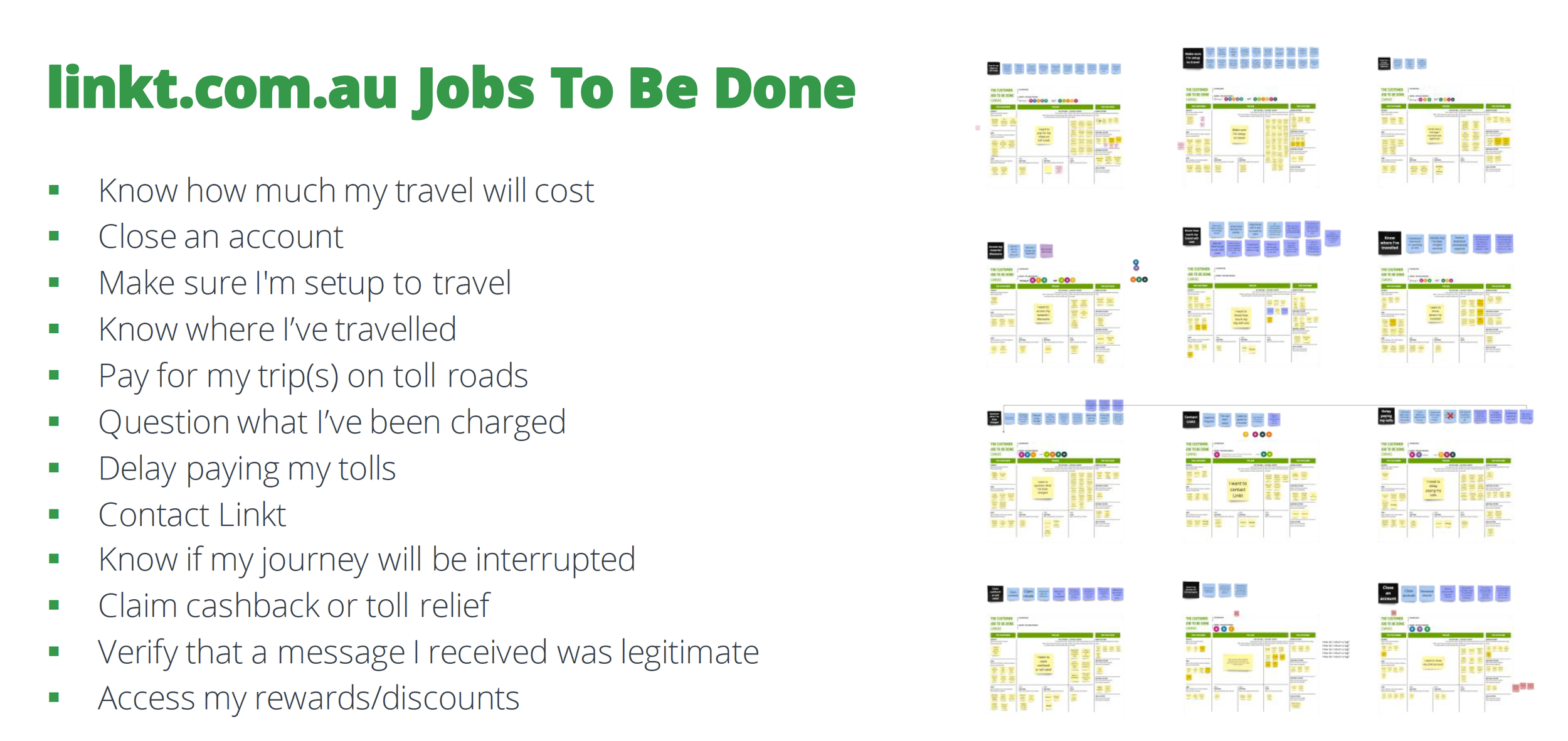
The team employed the Jobs to Be Done (JTBD) framework to understand and help articulate the fundamental tasks customers sought to accomplish when interacting with Linkt's digital assets. These helped to frame what customers were actually seeking to accomplish and helped to articulate these needs to the broader stakeholder group.
This required some education both within the digital team and senior leadership to understand the benefit and relevance of this approach.
We identified a comprehensive set of JTBD statements representing the overarching goals customers aimed to achieve on the website.
This step provided a customer-centric lens for evaluating website usability and identifying areas where the site failed to meet user needs.
3. Understanding the Current Products and State of Content
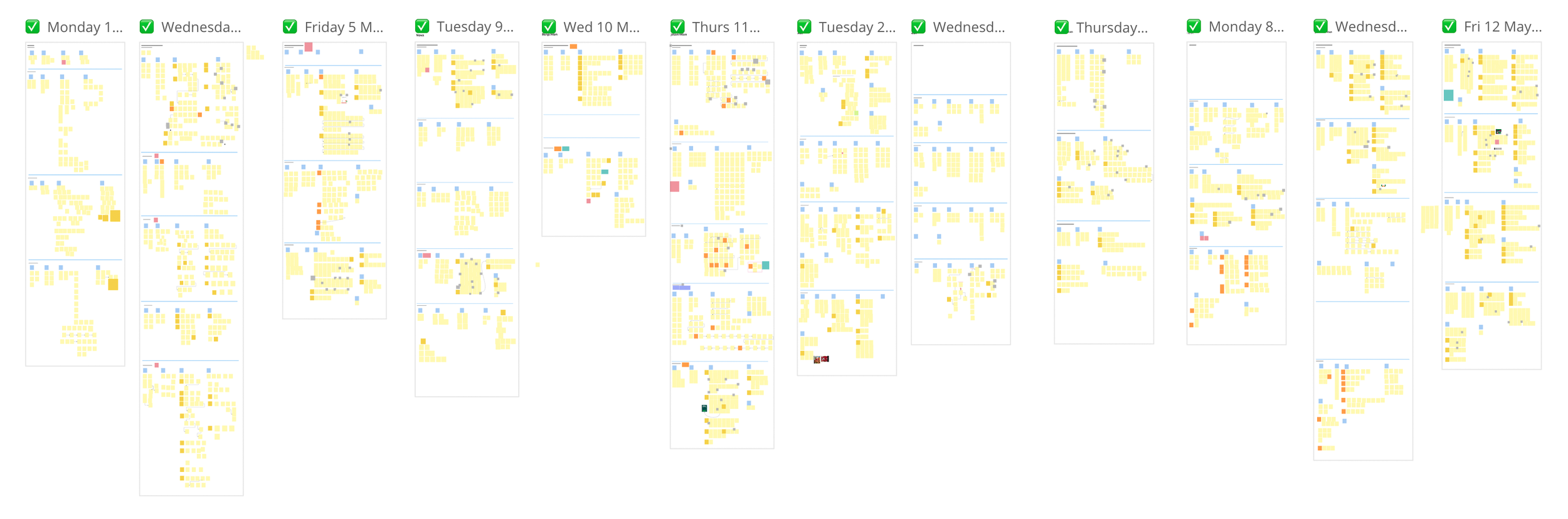
The team conducted a thorough audit of existing website content, evaluating its relevance, accuracy, organisation, and findability.
We analysed page structure, language, visual hierarchy, and adherence to content best practices.
This content analysis revealed many areas where content was outdated, duplicated, poorly organised, or difficult to understand. There were many places where content was overly verbose and the key information was buried within.
4. Identify the Gaps, Changes, or Challenges to Better Meet Customer JTBD


The team conducted task analysis research with 64 participants from across the established cohorts and locations, observing how customers attempted to complete specific JTBD, how they sought information and identifying points of friction.
User interviews provided qualitative insights into customer experiences, frustrations, and terminology preferences. In particular no customers used the internal website search features preferring to lean on Google searches as a first point of discovery.
This research highlighted specific usability issues, areas where content failed due to customers not being able to clearly find the answer, and discrepancies between customer language and Linkt's terminology.
5. Map Out the Key Tasks, Changes, and Challenges; Produce a Backlog for Digital Teams
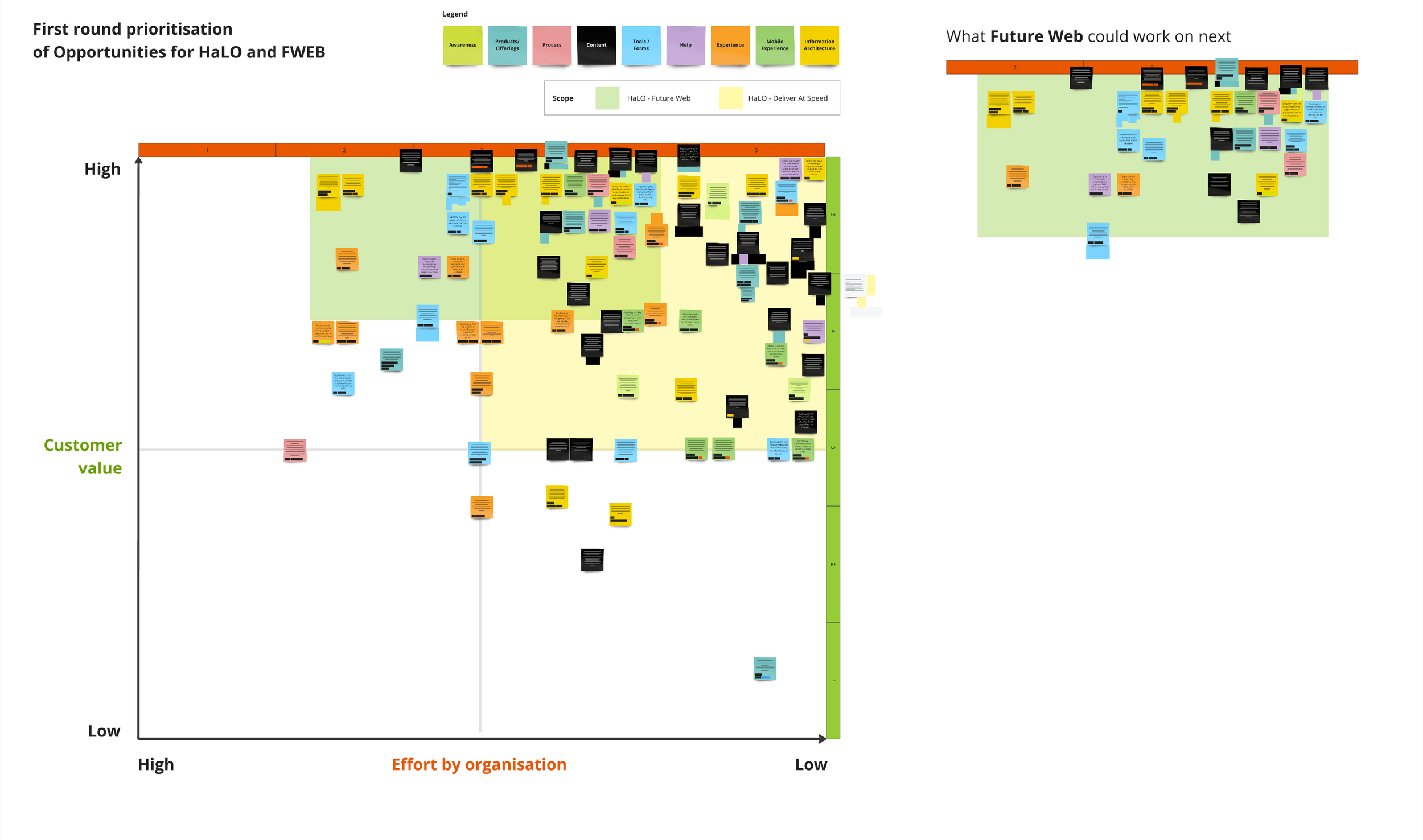
The team synthesised research findings, identifying key insights, opportunities, and recommendations for improvement.
We conducted a series of workshops and playbacks with various stakeholder teams to help understand the challenges and opportunities and help to make changes either to process, documentation or language used with customers.
We developed a prioritised backlog of tasks for the web teams, app team and other adjacent operation teams, outlining specific changes to language, content, information architecture, and features based on customer needs and business priorities.
Throughout I ensured that the research findings were translated into actionable steps, guiding the teams in their efforts to improve the Linkt website and enhance the user experience in digital locations as well as allowing the customer support teams to use the language that customers used.
Outcomes and Takeaways
The Future Web project yielded valuable insights into the customer experience both dealing with Linkt verbally and on the Linkt website, leading to a comprehensive set of recommendations for improvement. The research highlighted several key findings and opportunities:
Key Insights


Linkt is often not using the language that customers use, there are internal business terms that are used in both digital and call centre domains that do not align with how and what customers use. This leads to confusion even on some of the basic terms and concepts that customers need to navigate.
Customers default behaviour is to Google search first, internal website search was rarely used. Customers with Linkt website navigation and findability on site.
Customers are time-poor and task-oriented, often ignoring content unrelated to their immediate needs. Changing
Customers struggle with content comprehension due to length, complexity, unfamiliar language, and lack of clear structure.
Customers face challenges selecting the right product for their needs due to unclear information, some irrelevant products, inconsistent terminology, and inadequate comparison tools.
Awareness of our rewards & competitions is low, and currently hard to discover. Linkt’s communication strategies miss opportunities to engage customers at relevant touchpoints. Most of the competition or task adjacent information was missed or skipped over by customers while focused on their primary task.
Awareness of rewards programs is low, and existing content is difficult to find. Customers a primarily focused on solving their primary task and do not think to look back at the offerings that Linkt’s rewards program offered.
Opportunities
Remove duplicate content and provide only one source of truth for each topic.
Optimise content for readability and comprehension, introduce page summaries linking to key pieces of information and define and adhere to consistent page structures.
Simplify the website navigation but culling similar content or providing clearer names. Consider the information architecture and the split between product content and support content to enhance content discoverability.
Rewrite and develop clearer product CVPs to help customers better differentiate products.
Seperate residential, fleet and taxi products clearly.
Make a simple product comparison tool with that clearly explain offerings and associated costs.
Explore opportunities to improve the customer experience beyond the website including allowing customer service representatives to use the language customers use to identify aspects of their experience and improvements to on road signage.
Opportunities outside of the web team
Opportunity to re-evaluate Linkt's physical brand assets (i.e. road signage etc) for improved brand recognition and consistency.
Investigate smart ways to tell an onboarding story at entry and exits on our network.
Investigate ways to amend signage to better represent naming and appearance of tags to improve recognition.
Opportunity to position Linkt as the Australia-wide tolling operator, to assist with brand awareness and product coverage.
Standardise the naming of addresses across forms and tools using commonly use naming conventions.
Deeper dive into the Waze experience, which many participants used and understand how and if Waze is accurate with its toll pricing and whether this could be leveraged or improved upon.
Opportunity to meet customers where they are, and integrate toll pricing, support & payment options within Google Maps – not only to provide clarity but also to help create Linkt brand awareness for new customers.
Proactively identify when customers tags have stopped working and prompt them to do a tag health check and/or organise a replacement
Lessons Learned
Language needs to be clearly aligned with how customers speak. If Linkt has it’s own terms support documents, help and their call centre need to understand and be able to translate for customers or better yet default to common terms first.
The digital team and senior leadership could see the value of the JTBD framework in understanding customer jobs, their needs and motivations.
The need for regular reviewing of content and making sure there is only 1 source of truth.
Understanding that customers are both time poor and are not always familiar with how tolls work.
Content needs to help them get their job done efficiently or they will call instead.
The need for ongoing research and user feedback to iteratively improve digital experiences.
Experience Gained
Leading a team on a large and ongoing piece of research.
Helping leadership within digital prioritise and see the value in different ways of thinking.
Not seeking to redo the Information Architecture for the sake of it, but unearthing the problems like those with language and clarity that would have a greater impact.
Skills in collaborating with broad set of teams and stakeholders to translate research insights into actionable tasks for teams whilst planning and prioritising that work into subsequent quarters.
The hope is by leveraging these insights and recommendations, Linkt’s digital team can bring about significant improvements for road users and provide a much more transparent experience for its customers.
