
Owning it & making it work
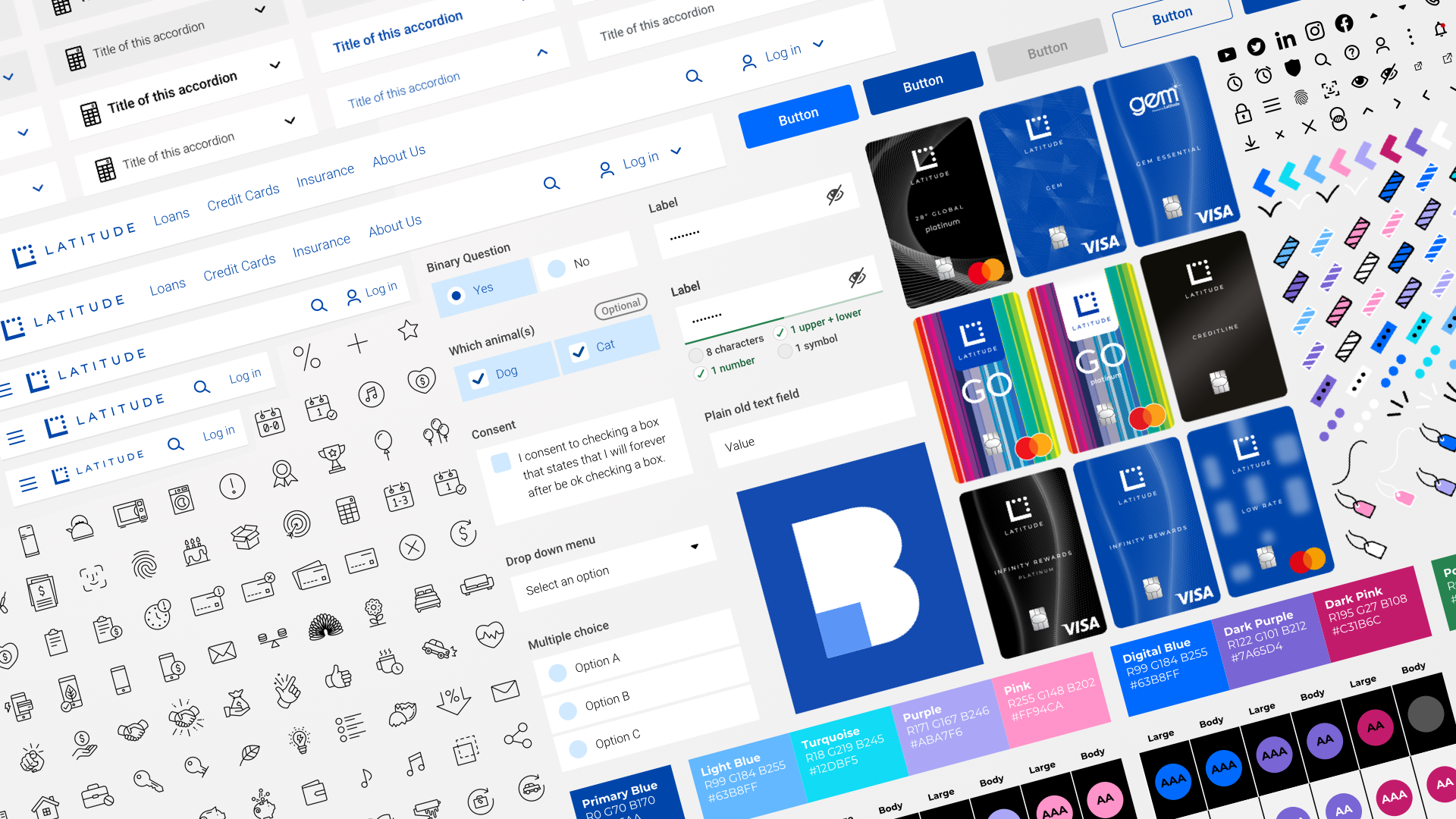
When I joined Latitude Financial Services (LFS), the design landscape within the org was fragmented. The UX and UI teams worked in silos, digital experiences presented inconsistent interpretations of the brand, and there was no central source of truth for design assets. Although I was engaged initially just as another UX designer, I saw my mission was to transform Latitude's design practice. There was so much potential for good, room to drastically enhance efficiency, fostering closer collaboration, and empowering the team to take ownership of their work.
At the core of this transformation was the establishment of a design system, design libraries and central project management — a foundational step toward improving design quality, scalability, and alignment across teams. This case study outlines how I spearheaded this evolution and laid the groundwork for a unified, efficient, and empowered design practice.
Challenges
Inconsistency Across Digital Experiences: There were five disparate interpretations of the brand across web and mobile platforms.
Disconnection Between Teams: UX and UI lacked alignment, causing inefficiencies and quality issues.
Scattered Assets: Brand materials, design files, and guidelines were fragmented across external agencies and internal teams.
Limited Scalability: Designers relied on ad-hoc solutions, making it hard to maintain quality or introduce repeatable processes.
Siloed Collaboration: Rivalries between departments and limited communication between design and engineering teams hindered progress.
Process and Initiatives

1. Establishing a Unified Visual Language
To bring cohesion and simplicity to Latitude's design, I initiated a range of visual improvements:
Typography Overhaul: Simplified the typography system by replacing costly, inconsistent, and unlicensed fonts with open-source alternatives.
Icon and Illustration Library: Created a consistent library of icons and stroke-based illustrations, adaptable to various use cases and scales, with supporting documentation for internal and external contributions and available to all within the organisation for both internal and external documentation.
Component Redesign: Improved all components to comply with accessibility standards and brand guidelines, ensuring alignment across platforms.
Common Patterns: Designed reusable content patterns and elements to streamline the rollout of new products and content.
2. Enhancing User Experiences
My focus extended beyond aesthetics to improve functionality and usability:
Navigation Enhancements: Helped to introduce a mega-navigation structure for quicker access to products and tools.
Clearer Information Presentation: Developed more human-readable "Important Information" sections for Terms & Conditions, balancing legal compliance with user-friendly layout and more human language.
Consistent Page Structures: Created standardised patterns for top-level, category, and product pages, enabling customers to navigate and understand Latitude's offerings more effectively.
Accessible Forms: Established a library of accessible form elements and patterns, improving usability available for all Latitude’s product application experiences.
3. Building a Design System
The cornerstone of my work was the creation and adoption of a robust design system:
Progressive Build and Maintenance: Developed libraries in Sketch and Adobe CC with clear versioning, regularly releasing updates to the team.
Cross-Team Contributions: Expanded the design system to include assets for EDMs, print materials, stationary, and internal documents. Brought more design team members in to help maintain assets enabling more contributions from other teams.
Centralised Source of Truth: Gathered all brand assets and licensed materials into a centralised hub accessible across the organization.
Advocacy for Design Ownership: Set the expectation that the design team would own all internal and external brand assets, ensuring long-term consistency and accountability.
4. Driving Collaboration and Openness
To bridge silos and foster a collaborative culture, I helped to establish and foster the following:
Design Council Meetups: Established forums for discussing design rules, sharing best practices, and aligning on pattern development.
Cross-Department Collaboration: Facilitated regular interactions between design, product and engineering teams, fostering trust and improving component development.
Workshops and Education: Organised workshop sessions to introduce new design techniques, timesavers, and walk through new design system features.
Open Communication Channels: Encouraged regular, informal catch-ups among designers, swarms to troubleshoot challenges, be open and empathatic to others and share ideas, and discuss ongoing projects.
Key Outcomes
Visual Consistency and Quality
Unified brand representation across all digital experiences.
Accessible and reusable assets, reducing design inconsistencies.
Improved Efficiency and Scalability
Streamlined design processes through repeatable patterns and components.
A scalable design system that brought accessibility to the fore.
Enhanced Collaboration
Stronger relationships between departments, breaking down historical rivalries.
A culture of openness where ideas and feedback were welcomed.
Empowered Design Ownership
The design team became the owners of all brand and design assets, helping to ensure alignment with Latitude’s vision.
Vendors and external partners aligned with the our design libraries and design system, reducing dependencies and improving overall vendor accountability.
Lessons Learned and Future Steps
This transformation underscored the importance of:
Design as a Central Pillar: Elevating design to a leadership-aligned function that drives consistency and innovation. Where the business is proud to own and control it’s destiny.
Cross-Team Integration: Fostering ongoing collaboration between design, engineering, and other departments to scale impact. Having robust tools to help us monitor the health of the system and how teams were using it was super helpful for monitoring the health and uptake of the design system.
Continuous Improvement: The design system is a living entity, requiring regular updates and alignment with organisational growth. This required significant investment of time to show leadership the ongoing benefits.
Looking ahead, their focus will be on:
Expanding the design system to further incorporate older service platforms and help build new ones.
Scaling the human-readable approach to make compliance and legal content more humane.
Spend less time building the nuts and bolts and more time focusing on things that change experiences for the betterment of their customers.
Conclusion
Through the introduction of a design system and helping to foster a culture of collaboration, Latitude Financial Services transformed its design practice into an efficient, scalable, and empowered entity. By championing ownership, unifying assets, and fostering openness, the design team was much better equipped to shape its own destiny and drive effective experiences for Latitude's customers.
