
Telstra Techbar POC
Telstra came to us with a problem. Across their retail locations customers frequently came in to resolve an issue they were having with a product or service, but knowledge was limited to who was available and institutional knowledge sat with a few experts spread across the organisation who were not always available.
The Telstra Techbar was developed as a pilot program to address these issues. The aim was to empower retail staff within a few select locations around Australia with tools to quickly resolve technical issues whilst creating a source of truth for solved problems and similar challenges creating a network of expert knowledge and distributing the effort and expertise.
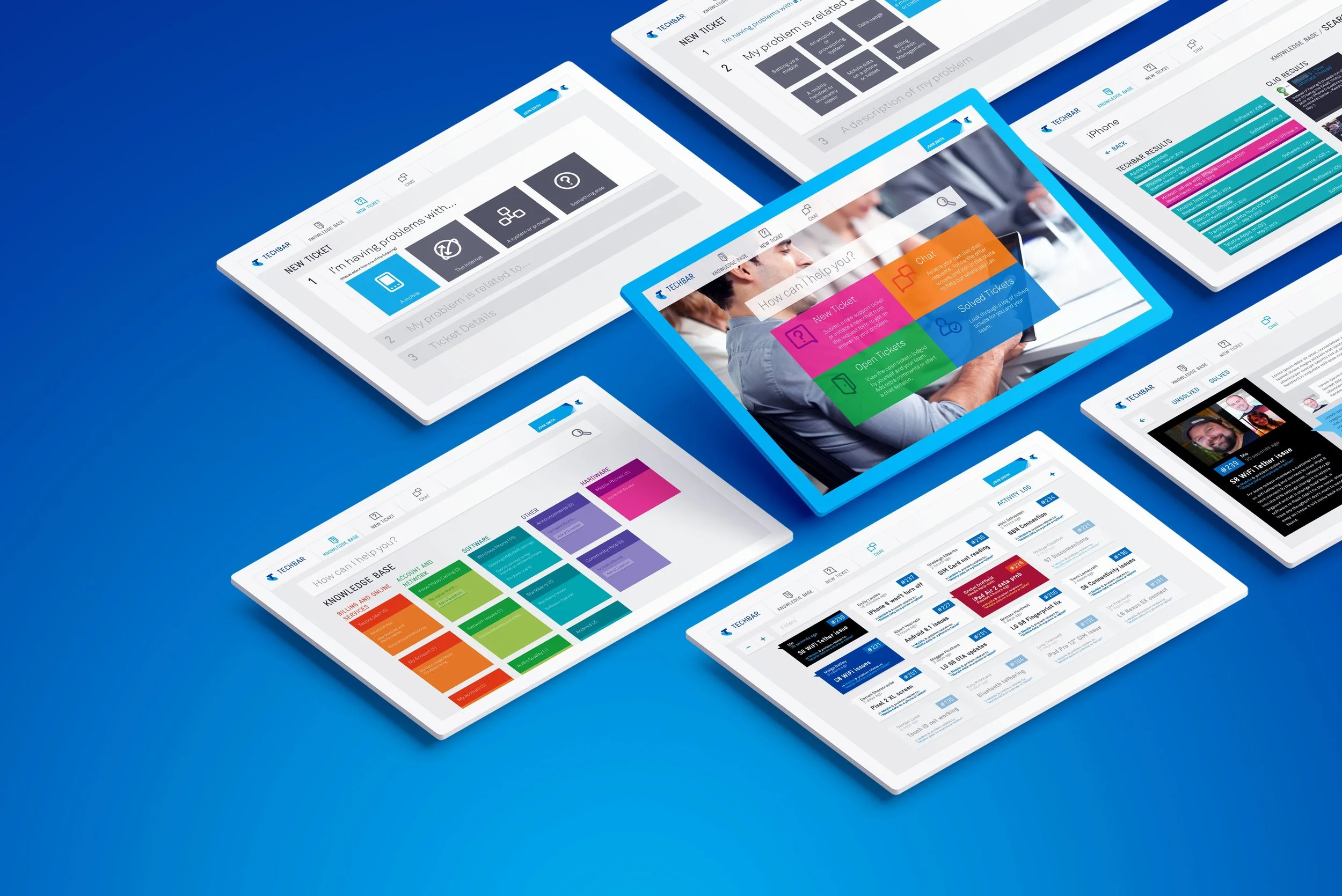
This case study outlines how a responsive, real-time system combining chat, ticketing, and knowledge-sharing was designed and developed to support Telstra’s nationwide retail network.
The problem
Retail staff frequently faced customer technical problems that frequently required follow-up after the customer had left the store. The ability to resolve these issues depended heavily on the specific skills, availability, and knowledge of the in-store team. This led to:
Delays in problem resolution.
Inconsistent outcomes depending on staff expertise.
Backlogs of unresolved customer issues.
Target Audience
Telstra’s retail store staff, who act as the primary touchpoint for customers with technical problems across their retail locations nationally.
Hypothesis
Telstra’s network of skilled staff spans the entire country, making their collective knowledge a valuable resource. A system that could effectively capture and share this knowledge in real-time would help retail staff quickly solve customer problems.
The solution needed to address two key questions:
Has this customer problem been solved before?
If yes, provide an easy way to find the answer.
If not, who can help me right now?
Connect staff to available experts or escalate issues efficiently.
My Role
I was initially engaged as a UI designer on a small cross-functional team team but progressively took on the role of UX/UI lead, collaborating closely with embedded UX researchers, the product owner, and development teams. My responsibilities included:
Participating in customer workshops, helping to develop mod guides and gathering insights.
Driving design ideation for user flows and interface concepts.
Delivering and presenting the proof-of-concept (POC) UI to stakeholders.
Interpreting Telstra’s brand guidelines to create a cohesive visual language for the POC.
Design Process
The design process was highly iterative and collaborative, evolving in response to user feedback:
1. Discovery and Ideation
Workshops and Research: Engaged directly with Telstra staff to understand their workflows, pain points, constraints and needs.
Rapid Wireframing: Started with whiteboard sessions to map out key flows and features. Iterating as we went and getting direct feedback from a small group of Telstra retail staff as we progressed.
2. Collaborative Development
Worked closely with developers to ensure the feasibility of designs and adapt them based on technical constraints as they arose.
Iterated on the user journey and overarching constructs with input from the broader UX team and developers on a regular twice-weekly cadence.
3. User Testing
Conducted usability tests with a broader sample of Telstra retail staff, gathering feedback on both functionality, experience and asthetics.
Integrated improvements into successive rounds of prototypes, refining the UI and overall user experience.
4. Visual Design
Created and documented a visual language that aligned with Telstra’s brand guidelines.
Focused on delivering a clean, responsive design that could easily scale to future implementations and work across both mobile and in-store devices available to retail staff.
Solution
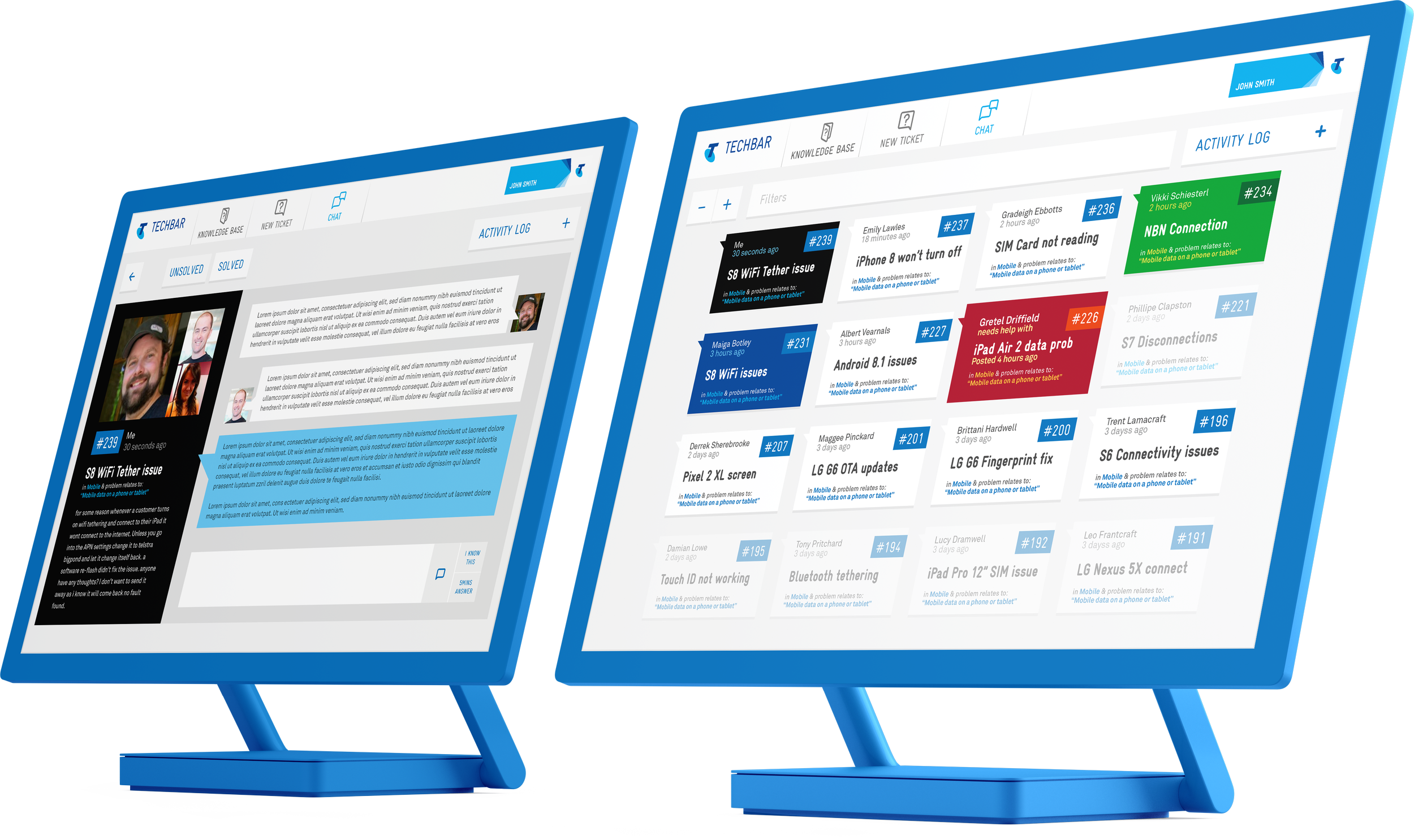
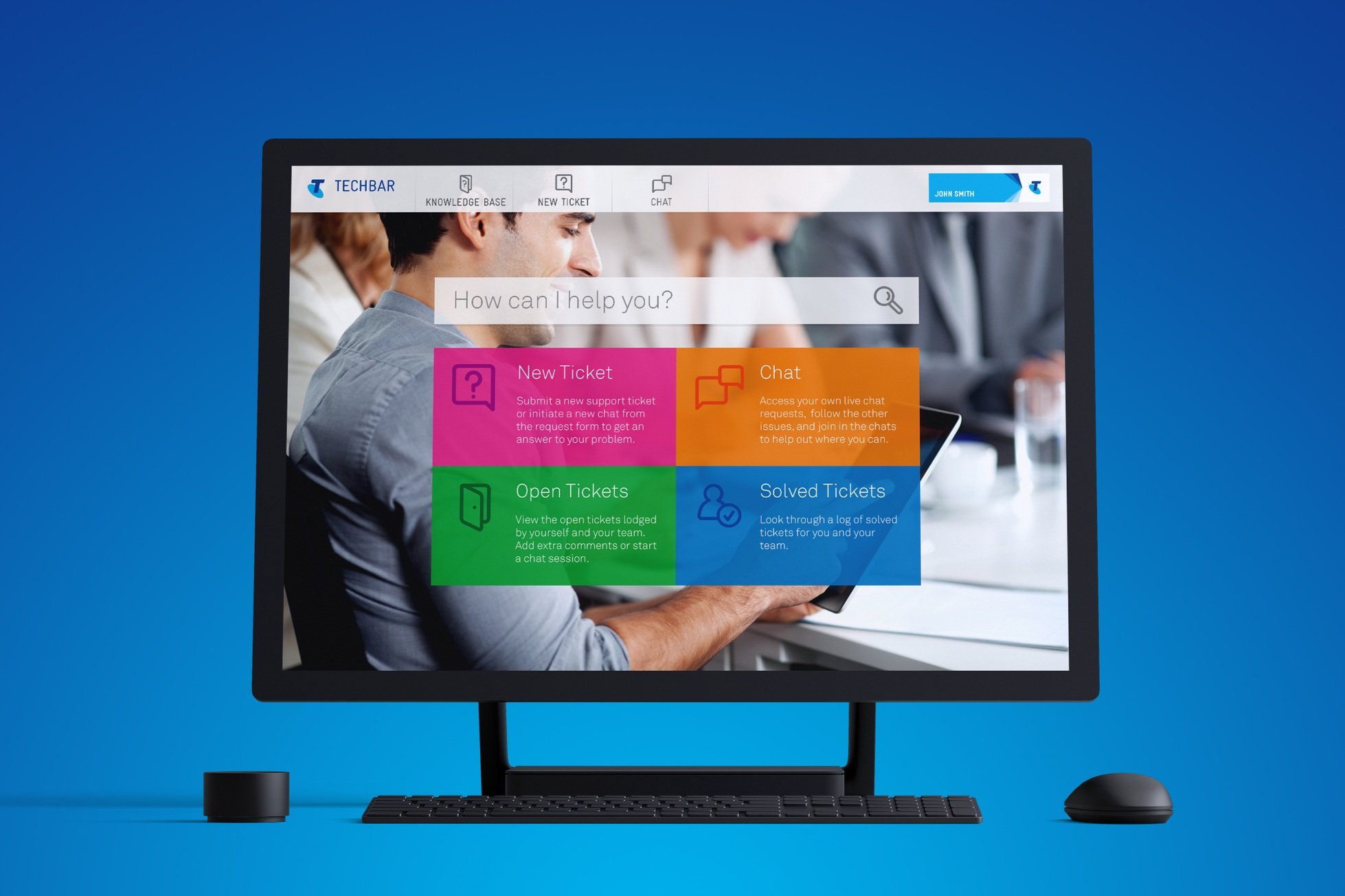
The POC was a responsive, web-based platform integrating real-time chat, ticket management, and a knowledge base, designed to streamline problem resolution.
Key Features
Centralised Search:
Provided frequent and recent (frecent) results from the knowledge base, clear ticket history, and active live chats between retail staff.
Ticketing System:
Allowed staff to log new issues, triggering notifications and live chats across the retail network and keep abreast of those that they were contributing to or needing a resolution on.
The notification and ticketing system ensured unresolved problems were tracked and followed up efficiently and raised in importance if left unanswered.
Live Chat Environment:
Built a swift real-time communication system between retail staff and experts.
Incorporated tagging/categorisation functionality, allowing questions and answers to automatically populate the knowledge base for future reference.
Outcomes
The Telstra Techbar pilot demonstrated significant potential to streamline customer problem resolution:
Improved Efficiency: Staff could resolve issues more quickly using frecent search results and live support.
Enhanced Knowledge Sharing: Tagged chat interactions and resolved tickets enriched the knowledge base available to all retail staff, creating a continuously improving resource.
Scalable Framework: The POC laid the groundwork for future enhancements, including more advanced search algorithms and machine learning-driven recommendations.
Lessons Learned and Next Steps
What Worked
Iterative Development: Frequent testing and feedback loops with retail staff ensured the solution met user needs and uncovered complications and oversights quickly.
Contextual Design: Tailoring the UI to existing retail workflows improved adoption and usability whilst reducing training time onboarding new staff to the platform.
Knowledge-First Approach: Empowering staff through a shared resource reduced dependency on individual expertise and sped up resolution time.
Opportunities for Growth
Automation: Implement machine learning-driven suggestions to further streamline ticket triage and resolution.
Broader Rollout: Expand the system to additional Telstra retail locations, incorporating insights from the pilot.
Enhanced Insights: Develop analytics for staff to track common customer issues and proactively improve support strategies.
Conclusion
The Telstra Techbar pilot shows how user-centred design and collaboration can transform complex workflows into painless experiences that improve people’s daily lives. By integrating real-time support, robust search, and knowledge-sharing tools, the Techbar empowered Telstra’s retail staff to resolve customer problems more efficiently, enhancing both employee and customer satisfaction in their retail stores.
